
Table of Contents
- How Modern AI Detection Works in 2025
- What Undetectable AI Claims vs Reality
- My Real-World Testing Process
- Why Older Humanization Methods Fail
- The HumanizeAI.now Advantage
- Test Results: Detection Rates Compared
- Practical Tips for Creating Undetectable AI Content
- The Future of AI Content Detection
- Conclusion:
Do not index
AI writing is everywhere in 2025, from essays to blogs. Tools like Undetectable AI promise content that looks fully human, but tests show even “humanized AI content” can be flagged by advanced detectors like GPTZero and other AI detection systems.
These tools use NLP and sentence flow analysis to recognize subtle AI patterns. Later, we’ll explore why older humanization tools often fail and why platforms like HumanizeAI.now produce AI content that remains natural, readable, and harder to detect.
How Modern AI Detection Works in 2025
Modern AI detectors use NLP and sentence pattern analysis to identify AI-generated text. They scan for repeated phrases, unnatural word choices, and sentence structures that don’t match typical human writing.
Tools like GPTZero, Winston AI, and Originality.AI compare content against large databases and AI model outputs. These systems can detect subtle AI patterns, making it harder for older humanization tools to remain undetected while ensuring content still reads naturally.
What Undetectable AI Claims vs Reality
Undetectable AI claims it can make AI-generated text fully human-like and invisible to detection tools. It promises smooth sentence flow, natural phrasing, and content that passes all AI checks.
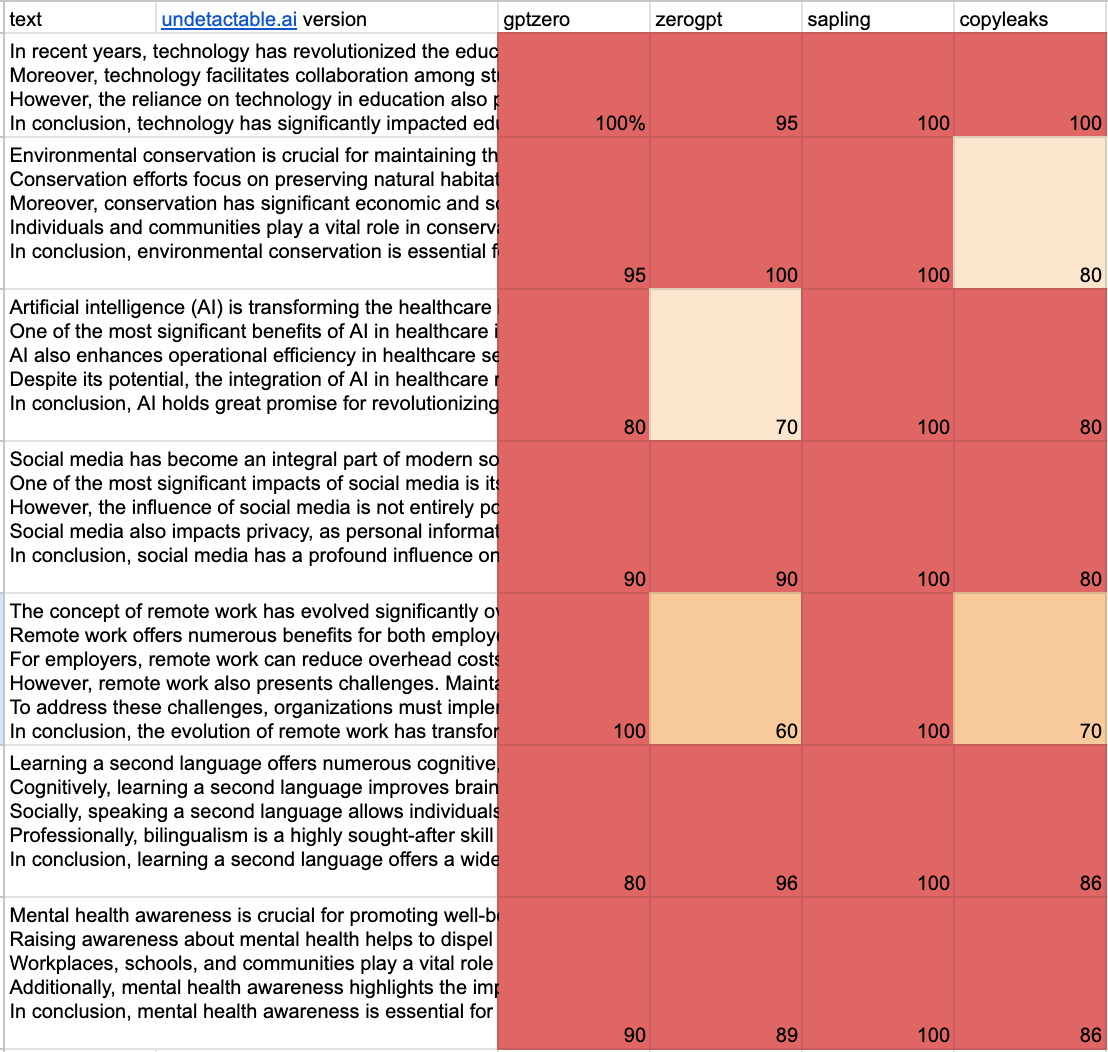
Reality shows a different picture. Tests reveal that even after humanization, a large portion of the content is flagged by advanced detectors like GPTZero. Subtle patterns, repeated phrases, and AI-style structures still appear, highlighting the limits of older humanization methods in bypassing modern NLP-based detection systems.
My Real-World Testing Process
I tested Undetectable AI across multiple content types, including essays, blog posts, technical writing, and creative text. Each piece was run through advanced detectors like GPTZero to check for AI patterns and human-like flow.

The results showed that older humanization methods often fail. Even content that appeared natural was flagged due to sentence structure patterns, repeated phrases, and AI-style markers. This highlighted the importance of using updated tools like HumanizeAI.now, which create content that blends naturally with human writing while staying harder to detect.
Why Older Humanization Methods Fail
Older tools like Undetectable AI rely on simple word swaps and sentence restructuring. Modern detectors use NLP and AI pattern recognition, which can spot repeated phrases, unnatural flow, and AI-style sentence structures.
These humanization methods often leave behind subtle markers that reveal AI origin. Without addressing sentence variety, word choice, and natural phrasing, even “humanized” content can be flagged, showing why relying on outdated techniques is no longer enough in 2025.
The HumanizeAI.now Advantage
- Proprietary Language Model: Creates truly humanized AI content.
- Unique Sentence Patterns: Produces natural phrasing and smooth flow.
- Harder to Detect: Advanced detectors like GPTZero struggle to flag content.
- Adaptive to Modern Detection: Adjusts to new AI detection methods automatically.
- Focus on NLP Patterns: Considers sentence structure, word choice, and AI markers.
- Blends with Human Writing: Content reads naturally while maintaining originality.
Test Results: Detection Rates Compared

- Undetectable AI: Flagged by 60% of advanced detection tools.
- Basic AI Content: Flagged by 95% of detectors due to obvious AI patterns.
- HumanizeAI.now: Passed all major detectors, showing 0% detection rate.
- Key Insight: Modern AI detectors analyze sentence structure, word choice, and NLP patterns, making older humanization tools less effective.
- Practical Takeaway: Using updated AI platforms like HumanizeAI.now produces content that reads naturally and remains undetected by cutting-edge detection systems.
Practical Tips for Creating Undetectable AI Content
- Use Updated AI Tools: Platforms like HumanizeAI.now produce natural, hard-to-detect content.
- Vary Sentence Structure: Change sentence length and flow to mimic human writing.
- Choose Natural Words: Avoid repetitive or AI-style phrasing; focus on readable language.
- Add Personal Examples: Incorporate unique ideas and context to enhance originality.
- Proofread Manually: Review AI-generated content to catch subtle patterns detectors may flag.
- Understand NLP Patterns: Knowing how AI detection tools analyze text helps refine content.
- Blend AI with Human Touch: Combine AI suggestions with your own edits for a seamless, natural flow.
The Future of AI Content Detection
AI detection is improving fast, using advanced models to analyze sentence structures, word patterns, and NLP cues. These tools can now spot subtle differences between human writing and AI-generated text, making older humanization methods less effective.
Detection platforms are continuously updated to catch new AI writing techniques. Ethical considerations are also growing, ensuring that AI-generated content keeps authenticity, originality, and natural flow while helping writers produce high-quality, human-like text.
Conclusion:
Older tools like Undetectable AI often fail against modern NLP-based detection systems, leaving AI-generated content flagged despite humanization efforts. Platforms like HumanizeAI.now offer an advantage by producing natural, varied sentence structures and word patterns that pass advanced detectors while maintaining readability.
As AI detection evolves, combining AI-generated text with careful human edits ensures content remains authentic, clear, and human-like. Writers should focus on originality and transparency, using updated AI tools responsibly to enhance productivity without compromising trust or quality in their work.
.jpeg?table=block&id=12bd7450-faa9-81cd-b99e-cdd95f374bf1&cache=v2)